
What We Do
At AmfiskA, we apply our four engineering pillars through a consulting‑led approach that supports organisations from early proposal development through concept definition, requirements, and delivery. With operational presence in both the UK and Spain, we understand not only the technical demands of entering new markets, but also the regulatory, procedural, and cultural nuances that can determine success or failure.
Too often, market entry is delayed not because a capability lacks merit, but because expectations around documentation, assurance, operating models, or engagement differ across regions.
AmfiskA helps organisations navigate these differences with clarity, aligning engineering rigor, regulatory understanding, and local context so that both businesses and engineering teams can confidently achieve their goals in UK and European environments.
While large consultancies focus on strategy and smaller firms focus on execution, AmfiskA operates at the critical interface—offering global systems thinking delivered with local expertise and project agility.
AmfiskA provides integrated operational analysis, architecture, and requirements expertise to help organisations win work, enter new markets, and deliver complex systems with confidence across UK and European environments.
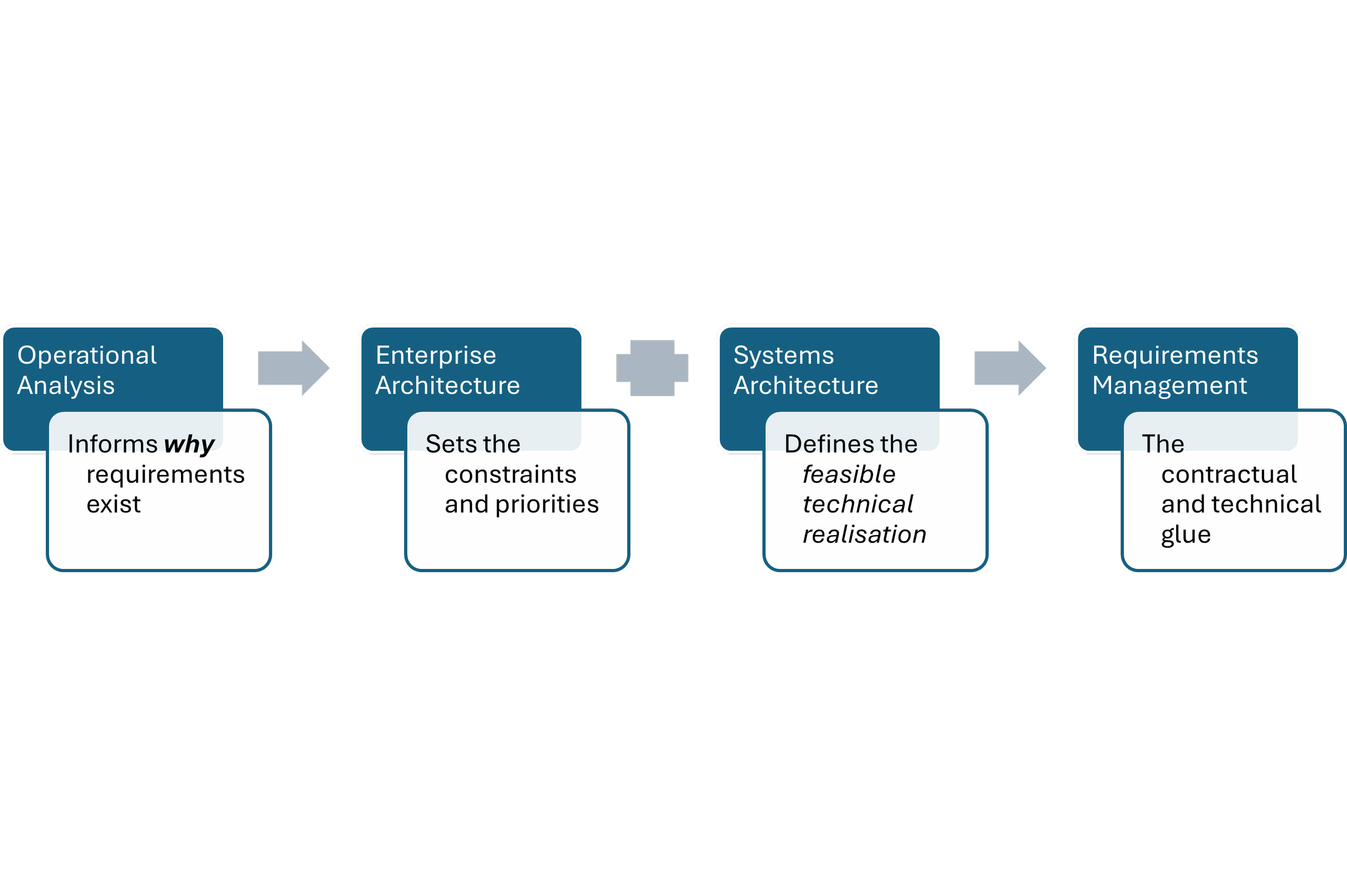
How We Do This.
Define the Decision and Operational Context
Characterise the Mission and Operational Scenarios
Identify Capabilities, Systems, and Forces
Develop Measures of Effectiveness and Performance
Select and Build the Analytical Approach
Human–machine–organisation interaction analysis
Supportability and sustainment modelling
Execute Analysis and Explore Alternatives
End‑to‑end kill chain / mission chain modelling
Enterprise Operational Analysis (Mission‑First)
Enterprise & Systems Architecture (Decision Design)
Define the Architectural Purpose and Stakeholders
Discovery phase to Understand Strategy, Mission, and Business Context
Establish the Architectural Framework and Viewpoints
Describe the Current State (As‑Is Architecture)
Define the Target State (To‑Be Architecture)
Perform Gap and Impact Analysis
Develop Transition Architectures and Roadmaps
Model and Validate Architectures
Govern and Assure Architecture Compliance
Define the Requirements Purpose and Governance
Understand Stakeholders and Operational Context
Elicit Needs and Candidate Requirements
Analyse, Refine, and Structure Requirements
Develop Requirements Architecture and Traceability
Validate Requirements with Stakeholders
Allocate and Flow Down Requirements
Plan Verification and Acceptance
Manage Changes and Maintain the Requirements Baseline
Requirements Engineering (Need‑Aligned)
Key Skills
Mission Thread / Capability Thread Analysis
Value Stream Modelling
Observe, Orientate, Decide, Act (OODA) Loop Analysis
Defence Lines of Development (DLOD) Analysis
Feasibility Studies
Gap Analysis
Concept of Operations (CONOPS)
Operational View (OV) models
Workshop Management
TOGAF
NATO Architecture Framework (NAF)
ArchiMate
Enterprise Architecture
ISO 42010
Documentation Development
ISO/IEC/IEEE 15288 – System life‑cycle processes
INCOSE Systems Engineering Handbook Understanding
Requirements Development & Management
V‑Model (verification and validation alignment)
Model‑Based Systems Engineering (MBSE)
DOORS Database Development
Interface Management
System of Systems Thinking
Engineering Management
Project Management
Technical Proposal Support
Team Augmentation
Research & Development Support
Cultural Bridge
Business Optimisation
Transformation Management