
Aerospace & Defence
Aerospace & Defence systems do not fail because of a lack of engineering excellence, but instead because complex socio‑technical systems are treated as isolated solutions rather than integrated enterprises.
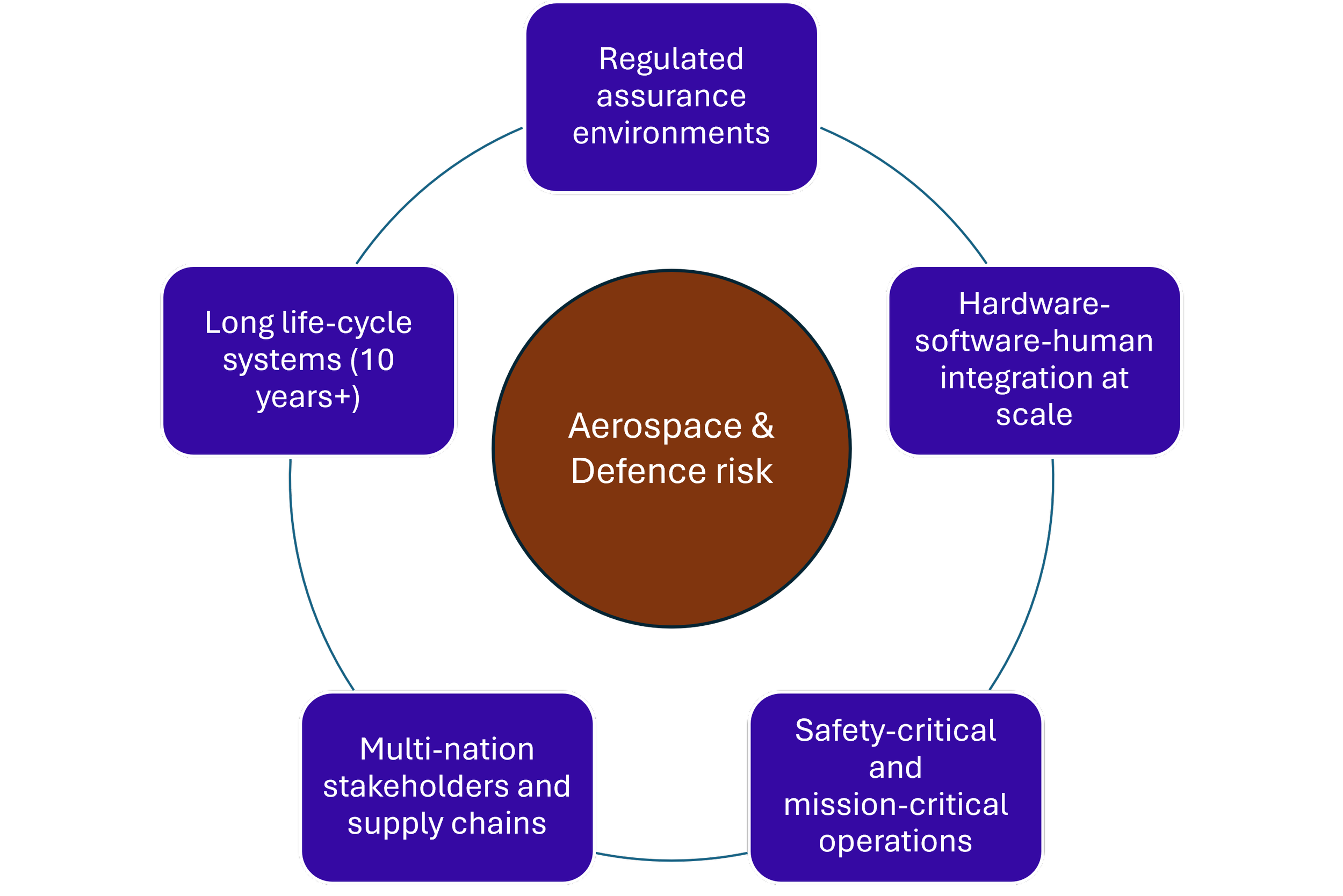
Modern programmes are increasingly complex systems‑of‑systems where failures are rarely caused by a single component but instead by systemic misalignment between operational concepts, system architecture, and requirements propagated across complex supplier ecosystems that dominates cost and schedule leading to:
airworthy aircraft that aren’t available
compliant platforms that aren’t deployable
certified systems that aren’t operationally usable
conflicting assumptions
architecture‑incompatible requirements,
Operational analysis makes mission success criteria explicit and ensures end‑to‑end mission threads, including human, organisational, and logistical constraints, are designed in from the outset, while
Enterprise and systems architecture establish early integration logic and controlled evolution.
Rigorous requirements engineering then translates mission intent into traceable, testable, and contract‑safe obligations that support certification and delivery, preserving architectural intent across contractual boundaries.
In short, mission definition effectiveness matters, architecture provides the primary risk‑reduction mechanism, and requirements define contractual truth. Getting all three right is decisive for programme and business success and that is where AmfiskA comes in.